
The 1964 Washington quarter holds a unique position in U.S. coinage. It marks the end of an era, standing as the final year quarters were struck in 90% silver for general circulation. That single fact already gives the coin lasting appeal, yet its importance runs deeper than metal content alone. High mintages, strong survival rates, and a wide range of collectible conditions have turned the 1964 quarter value a considerable asset for both beginners and advanced collectors.
Produced by the United States Mint, the 1964 quarter was struck at two facilities. Philadelphia issued coins without a mint mark, while Denver added the familiar “D.” Together, they produced more than 1.26 billion quarters in a single year, an enormous number by any standard. Despite that volume, collector demand has remained strong for decades.
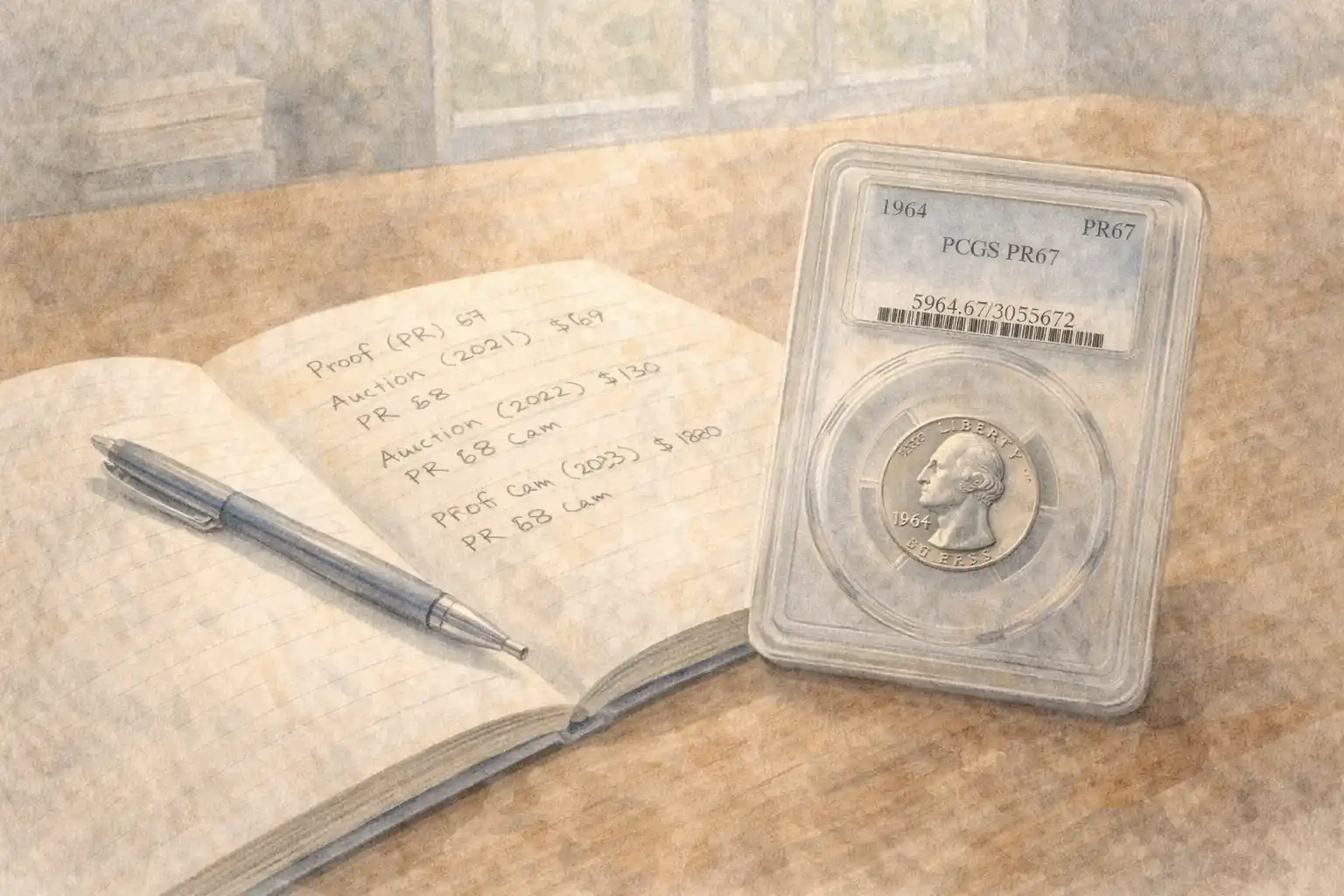
Why? Because 1964 combines three forces rarely aligned in modern coinage:
the final use of 90% silver
widespread circulation that created condition scarcity later
a deep market for high-grade and specialty examples
Even heavily circulated pieces retain value tied to silver prices. At the same time, pristine survivors command prices that rival many classic U.S. rarities.
The Silver Composition That Changed Everything
Each 1964 Washington quarter weighs 6.25 grams and contains 0.1808 troy ounces of pure silver. That intrinsic content places a natural value floor under every example, regardless of wear. In average circulated grades such as XF40, most coins trade around $6–$7, tracking bullion markets rather than numismatic premiums when checked via the best free coin identifier app.
This silver composition also connects the coin to a critical turning point in American monetary history. Rising silver prices forced the Mint to abandon precious-metal coinage after 1964. From 1965 onward, quarters switched to a copper-nickel clad structure, ending public circulation of silver coins.
Collectors view 1964 as the closing chapter of that system. Unlike earlier silver quarters that disappeared rapidly from circulation, 1964 pieces remained common in everyday use for years. That prolonged circulation created a sharp divide between worn examples and the few that escaped untouched.
Philadelphia and Denver Issues at a Glance
Although both mints used the same silver alloy and design, subtle differences affect collector demand.
1964 Philadelphia (no mint mark)
Approximate mintage: 560 million
Often seen with softer strikes due to heavy production1964-D Denver
Approximate mintage: 704 million
Typically sharper detail, stronger luster in high grades
These distinctions matter most at the top end of the grading scale. Circulated coins from either mint behave similarly in price (check each example via the best coin value app for accurate and fair prices). Uncirculated examples, especially MS67 and above, show dramatic differences in scarcity and value.
Why Circulated Coins Still Matter
Not every outstanding 1964 quarter sits in a slab. Many collectors appreciate the coin as a tangible link to the last silver era of U.S. change. Circulated pieces offer:
affordable entry points tied to silver content
historical relevance without high risk
steady liquidity in both collector and bullion markets
This dual identity keeps the 1964 quarter active in the market year after year. It functions as bullion, as a type coin, and as a condition rarity—all at once.
Condition, Grading, and the Premium for Exceptional Survivors
Condition defines the difference between a silver quarter and a standout collector coin. With more than a billion pieces struck in 1964, survival alone does not create value. Surface quality does. Luster strength. Strike sharpness. Freedom from contact marks. These factors separate melt-value coins from five-figure results.
Most 1964 quarters entered circulation immediately. Bags were heavy. Handling was rough. As a result, truly pristine examples are scarce today. Coins graded MS65 already show a meaningful jump in price. Above that level, the population drops fast.
Experienced collectors look for specific visual traits:
bright, uninterrupted cartwheel luster
crisp hair detail on Washington’s portrait
sharp eagle feathers on the reverse
clean fields under 10× magnification
Any dullness, haze, or hairlines can push a coin down several grade points, erasing thousands in potential value.
Market Impact by Grade
Professional grading transformed how 1964 quarters trade. Certification by Professional Coin Grading Service or Numismatic Guaranty Company confirms originality and condition, often multiplying resale value compared to raw coins.
Type | XF40 | MS65 | MS67+ | Record Price |
1964 Philadelphia | ~$6 | ~$36 | $3,840 | — |
1964-D Denver | $6–$7 | ~$30 | $1,700+ | $38,400 |
1964 Proof | — | ~$15 | $2,350 DCAM | $2,500 |
The Denver issue dominates the high end. A 1964-D graded MS68 reached $38,400 at auction, a price driven by extreme rarity at that level rather than silver content. Only a handful of coins qualify.
Proof Coins and Visual Contrast
Proof 1964 quarters were struck in Philadelphia with specially prepared dies and polished planchets. Around 3.95 million were produced, all in 90% silver. Most survive, yet condition still matters.
Top-tier proofs show:
mirrored fields with no cloudiness
strong contrast between frosted devices and dark fields
sharp rims and square edges
Grades of PR68 already bring four figures. PR69 Deep Cameo pieces consistently exceed $2,000 due to their visual appeal and registry demand.
Varieties That Elevate Ordinary Coins
Beyond grade, certain varieties push values far above standard levels. These pieces are scarce, visually distinctive, and widely recognized.
Key examples include:
Doubled Die Obverse (DDO FS-101)
Visible doubling on “IN GOD WE TRUST”
Typical value: $145–$250 depending on conditionRepunched Mint Marks (RPM FS-501 / FS-502)
Clear separation in the Denver “D”
Values range from $450 to five figures in top gradesType B Reverse (Proof Reverse on Business Strike)
Distinct separation in the “E” and “S” of STATES
Commonly $100–$400 in MS651964-D / 1965 Reverse Mule
Transitional die pairing
Values start around $140
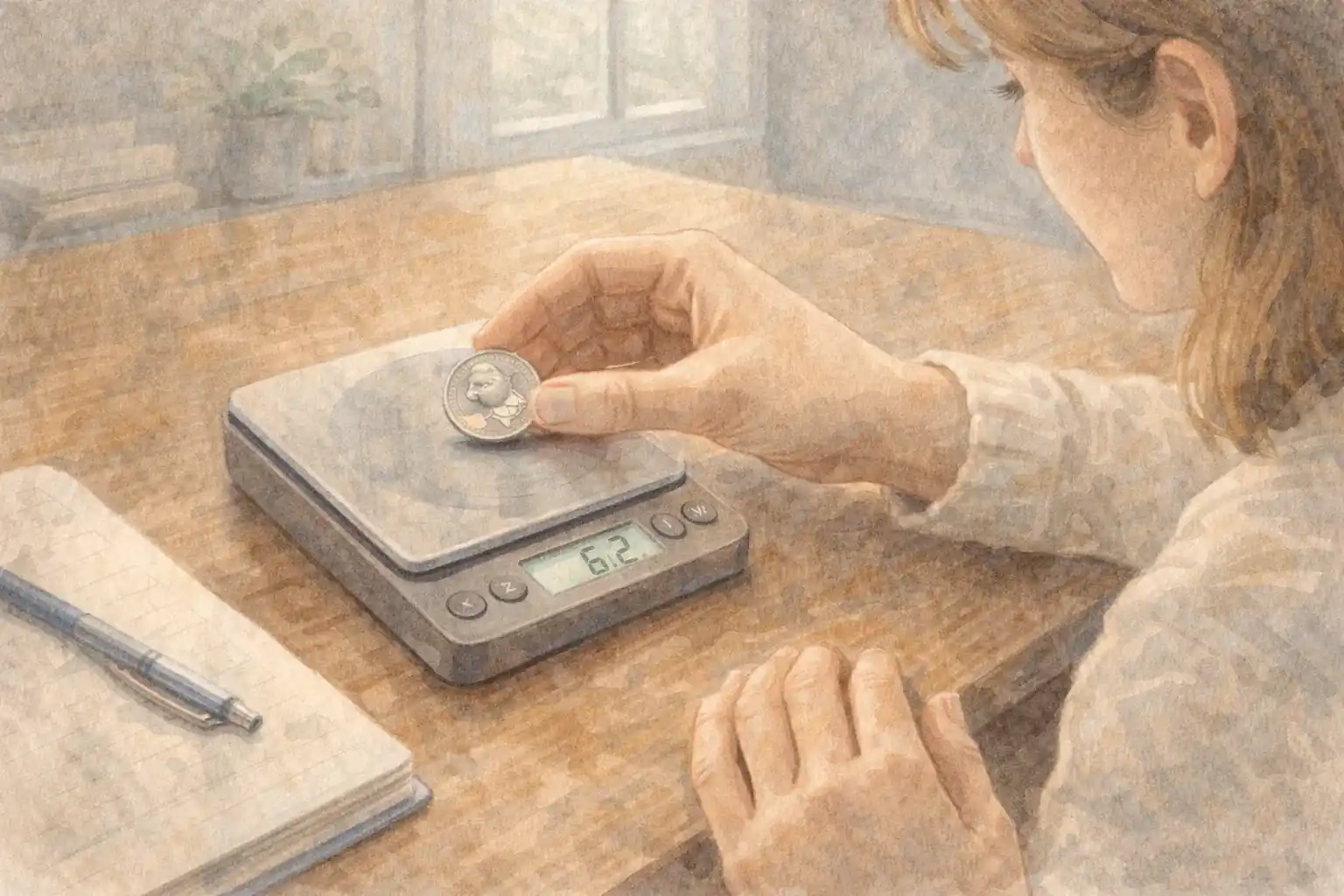
Identifying these requires careful comparison, accurate measurements, and attention to reverse details. Digital tools such as the Coin ID Scanner app can assist by confirming specifications like weight, diameter, and composition before deeper variety attribution.
Condition remains the foundation. Varieties and proofs add layers of appeal.
Special Mint Sets, Smart Hunting, and Long-Term Collector Appeal
Beyond standard business strikes and proofs, 1964 quarters also appear in Special Mint Sets (SMS), a category that often surprises collectors. These coins show a distinct satin finish—neither fully prooflike nor typical circulation quality. Edges are sharp. Surfaces appear smooth and even, without mirrored fields.
Roughly 1.1 million Special Mint Set quarters are believed to exist. Most trade in the $20–$25 range, yet top-grade survivors tell a different story. Gems with exceptional surfaces and strong eye appeal have reached prices up to $25,000, driven by condition rarity and competition among advanced collectors.
Why Special Mint Sets Matter
Special Mint Set quarters sit at the crossroads of mass production and selective preservation. They appeal for several reasons:
lower availability than regular business strikes
distinctive finish that stands out under magnification
strong demand for high-grade registry examples
Their understated look often causes them to be overlooked in raw form, especially when mixed into older collections.
Practical Ways Collectors Still Find Standout Coins
Despite decades of searching, exceptional 1964 quarters still surface. Success depends on where and how collectors look.
Common hunting grounds include:
estate sales with untouched accumulations
inherited collections stored for decades
online marketplaces listing raw silver quarters
dealer junk-silver bins hiding high-grade pieces
Condition evaluation comes first. Coins showing uninterrupted luster, clean fields, and sharp rims deserve closer inspection. Anything approaching MS65 or better may justify professional grading.
For preliminary checks, many collectors rely on Coin ID Scanner. Its photo-based identification confirms mint year, composition, diameter, and weight, helping separate standard strikes from Special Mint Set finishes or Type B reverse candidates before committing to certification.
Preservation and Market Timing
Once identified, protection matters. Outstanding coins should be stored immediately to prevent friction or toning.
Best practices include:
archival 2×2 holders or inert capsules
minimal handling, ideally with gloves
stable storage away from humidity and heat
Selling strategy also plays a role. Certified examples perform best when silver prices are stable and collector demand is active. Auction records show that coins graded MS67 and above consistently outperform raw listings, often by multiples rather than percentages.
Why the 1964 Quarter Endures
The 1964 Washington quarter remains outstanding because it satisfies multiple collector goals at once. It offers tangible silver value, historical significance, and genuine condition rarity. It can anchor a type set, introduce new collectors to grading, or challenge specialists chasing top populations.
Few modern U.S. coins deliver that range. Decades after its release, the 1964 quarter still rewards careful study, patient hunting, and disciplined evaluation—qualities that define strong collecting at any level.